


Recently, I visited Regensburg after some physicists invited me over to check out their University and to talk a bit about microscopy. While we got along pretty well, I think, I don’t know off the top of my head if they’re cool with being named here, which is why I sound a bit like a Dürrenmatt book.
The massive building (that being an understatement already, it is a love letter to brutalism) happens to have hosted the Jugend Forscht Contest (Youth researches?), where young and up-and-coming academics present their research spanning from the analysis of decomposing pig heads, to optimizing 3D printed springs or accelerating scanning tunneling microscope imaging through infrared, to name a few (I could be wrong on the latter, this is unpublished research and therefore… unpublished and hard to look up).
One way or another, I’m really happy that I went and could take a peek behind the scenes. They even gave me some gold leaves and some platinum-iridium wire, which is of course a motivator to jump back to the STM project.
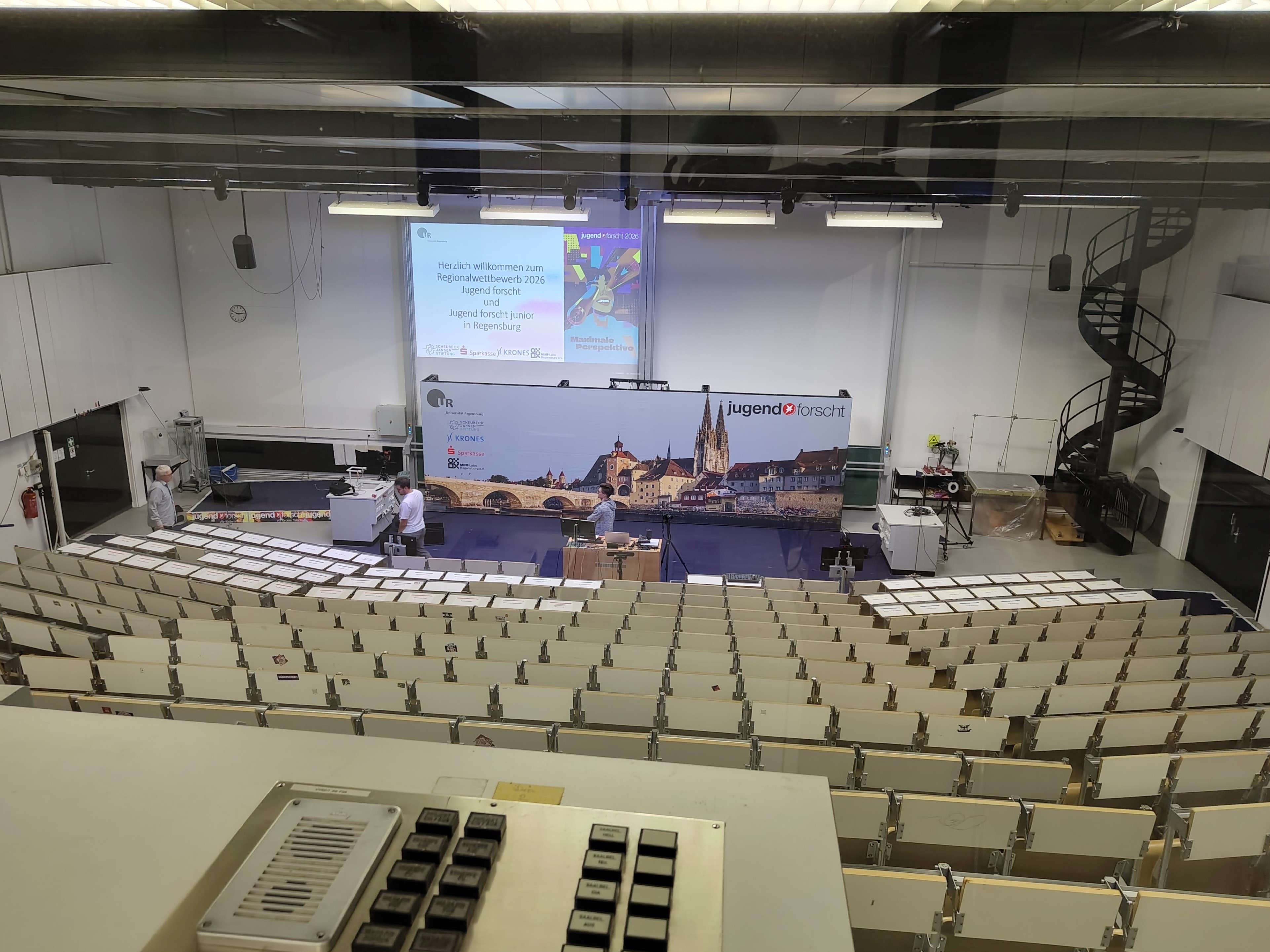 Students used to smoke in this auditorium.
This get-together happens also to be the reason why I’m growing even more interested in neural networks. Since I finished my C# intermediate course, learning Python (soon TypeScript) seems like an easy breeze, and I like that I build up a granular understanding of how every node works, so much so that I can actually calculate them by hand. (Except for the sigmoid function, for whatever reason it always takes me a bunch of tries even though it’s rather straightforward.) This burst of productivity and motivation doesn’t happen in a vacuum, but rather in a team effort, which I’m also stoked to get more involved in. What this exactly is, is something I’ll probably talk about in a later blog post in detail.
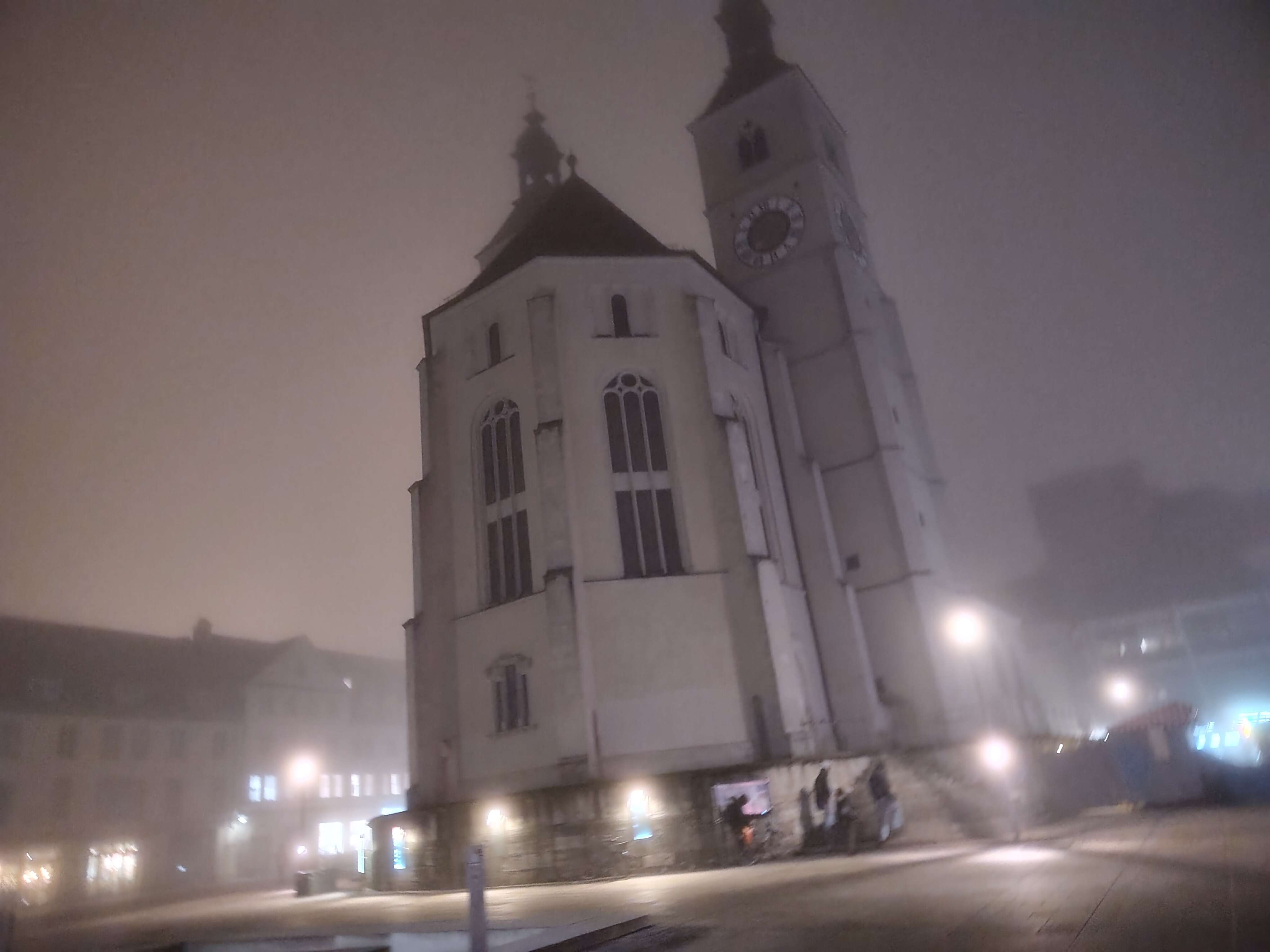 Silent Hill2 is based on Regensburg (true fact)
The theoretical aspect of all things neural networks isn’t lying around dormant either. After navigating myself out of the limbo that is theological research for a pragmatist, I grow more and more suspicious of the current discourse that seems to nod off Descartes too easily for my taste. The thoughts I developed are rather raw and unrefined still, but my main thesis is that intentionality cannot occur in a deterministic system. Before we speak about Geist, consciousness, or will, I strongly believe that intentionality is the very base requirement for thinking as we perceive it. Hence, it cannot occur in a closed Von Neumann machine.
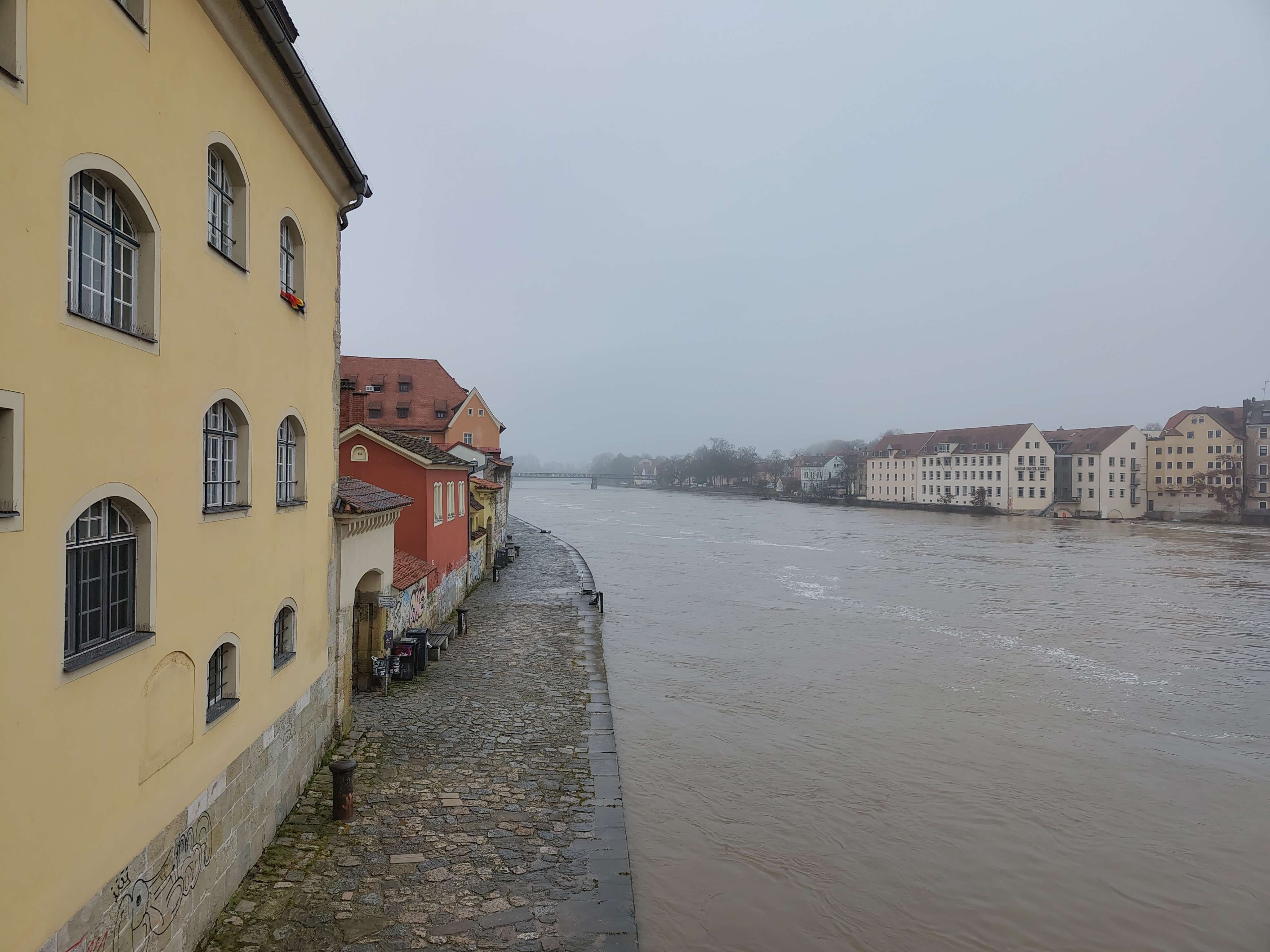 The name “Regensburg” is above anything else very plausible.
The most common response to this idea is that this could be solved by adding more power, more complex software, and whatnot. However, these computers are fundamentally not capable of creating a random number, hence always acting 100% deterministically. Any attempt to feed it with intentionality by giving it access to quantum-like chances or randomness would also circumvent the restriction of it having to have a Neumann architecture. A philosopher might argue that these thoughts and ideas seem to rhyme with what already exists, but while Descartes is just as relevant as he used to be, in the world of computers an essay about that which is 20 years old is ancient scripture in comparison. As usual, I’m extremely interested in what implications this might hold in relation to AI.
As I’m writing this at a café out in the wild, I will leave it at that and return to researching moccachinos for now.